Cannabis Drug testing by state: the 2026 map
Where cannabis rules limit pre-employment testing — and where they don't.
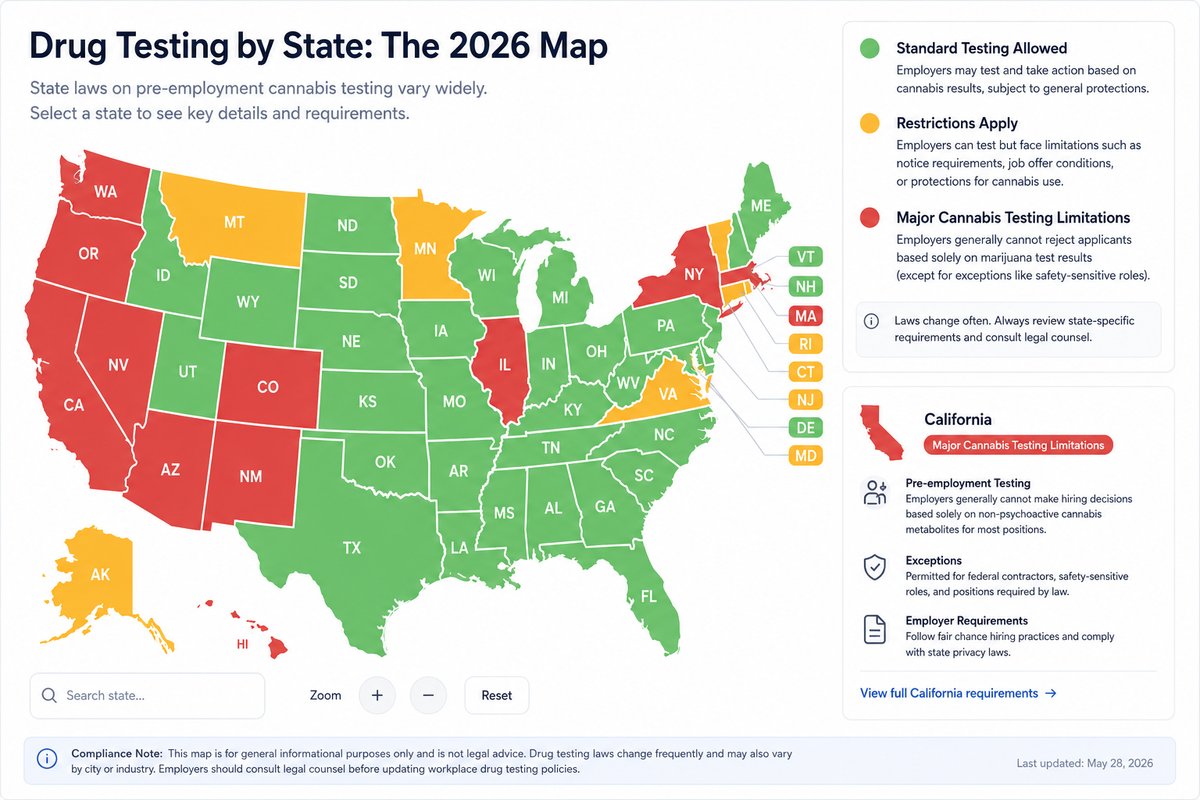
Cannabis Drug Testing by State: The 2026 Compliance Map
Drug testing laws are changing rapidly across the United States. While drug screening remains an important part of the hiring process, employers can no longer rely on a single nationwide policy—especially when it comes to cannabis testing.
Some states still allow broad pre-employment drug testing. Others prohibit employers from rejecting applicants based solely on marijuana test results. Several states require written notice, conditional job offers before testing, or special protections for medical cannabis users. For employers hiring across multiple states, staying compliant has become increasingly complex.
Why this matters
A policy that is compliant in one state may violate employment laws in another. As cannabis legalization expands and workplace protections evolve, employers should review their drug testing programs regularly and ensure they reflect current state requirements rather than relying on outdated policies.
States with the biggest differences
Some examples of notable state requirements include:
- California – Employers generally cannot make hiring decisions based solely on non-psychoactive cannabis metabolites for most positions.
- New York – Pre-employment cannabis testing is largely prohibited except where required by law or for safety-sensitive roles.
- Nevada – Most employers cannot refuse to hire an applicant because of a positive marijuana test, subject to important exceptions.
- Washington – Restrictions apply to many pre-employment cannabis testing decisions.
- Minnesota – Most pre-employment THC testing is prohibited except for designated positions.
- Connecticut – Drug testing is permitted but is subject to detailed notice, privacy, and procedural requirements.
Best practices for multi-state employers
- Maintain a written drug testing policy.
- Identify safety-sensitive positions separately.
- Apply state-specific hiring workflows where required.
- Provide required notices before testing.
- Work with accredited laboratories and Medical Review Officers (MROs).
- Review your policy at least annually as laws continue to change.
How Cleo helps
Cleo helps employers apply the correct compliance workflow based on job location and hiring requirements. Whether you're hiring in one state or fifty, Cleo ensures the appropriate disclosures, authorizations, and hiring steps are presented to candidates—reducing compliance risk while keeping the hiring process fast and consistent.
Compliance Note: This guide provides general information and is not legal advice. Drug testing laws change frequently and may also vary by city or industry. Employers should consult legal counsel before updating workplace drug testing policies.